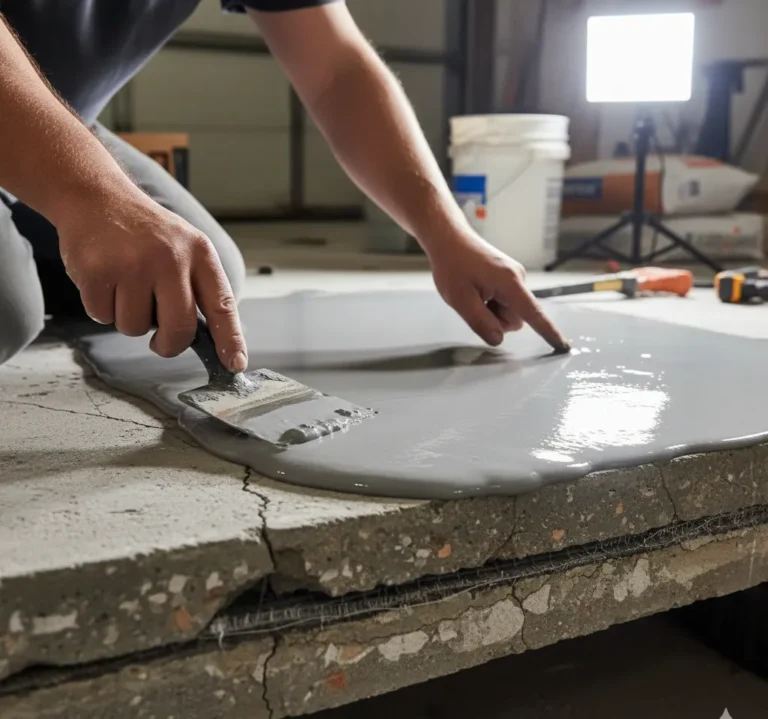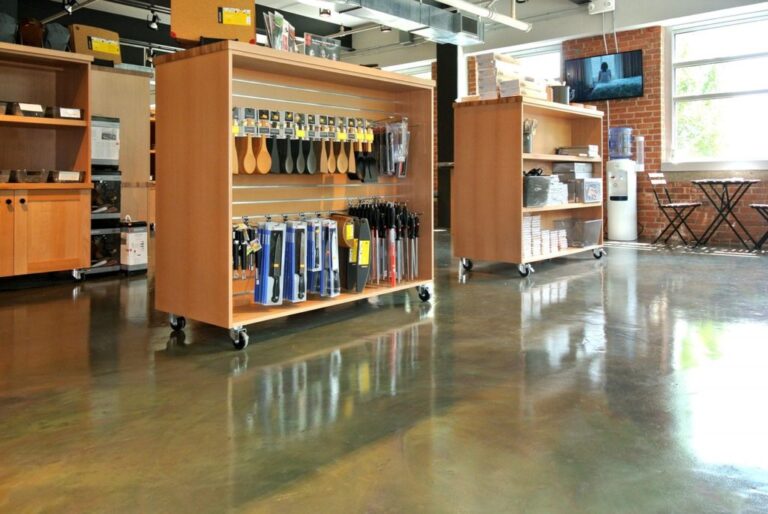
Choosing the right epoxy flooring system is one of the most important decisions for any commercial, industrial, or residential project in the UAE. With temperatures exceeding 45°C in the summer, moisture rising through concrete slabs, and strict building code requirements in Dubai, Abu Dhabi, and Sharjah, selecting the right epoxy type is crucial for long-term performance.
The three most commonly specified epoxy types in the market are:
- Solvent-Based Epoxies
- Water-Based Epoxies
- 100% Solids Epoxies
Each has its own chemistry, durability profile, environmental impact, and recommended use cases. In this in-depth guide, we compare all three systems from the perspective of UAE construction standards, local climate challenges, and industry best practices, along with insights from Duraamen’s high-performance resin flooring technology.
What Are Epoxy Flooring Systems?
Epoxy flooring is a combination of resin and hardener that chemically react to form a durable, seamless, and protective surface. Epoxies are widely used in the UAE for:
- Warehouses and logistics facilities (Dubai South, JAFZA, DIC)
- Manufacturing plants (Abu Dhabi Industrial City, Sharjah Industrial Area)
- Retail stores and showrooms
- Parking garages and basements
- Villas in Dubai Hills, Arabian Ranches, Nad Al Sheba
- Hospitality and F&B kitchens
- Healthcare and pharmaceutical environments
The performance of an epoxy system heavily depends on its formulation—specifically whether it is solvent-based, water-based, or 100% solids.
1. Solvent-Based Epoxies: Traditional but Declining in the UAE
Overview
Solvent-based epoxies contain a high percentage of VOCs (volatile organic compounds). The solvent acts as a carrier that evaporates during curing, leaving behind a thin epoxy film.
Historically, they were widely used, but modern regulations and environmental standards have reduced their popularity—especially in regions like Dubai and Abu Dhabi.
Key Features
Excellent Penetration into Concrete
Solvent molecules help the epoxy absorb deeper into porous concrete, improving adhesion even on older slabs.
Fast Curing
They cure more quickly than water-based epoxies, especially in warm climates like the UAE.
Good Chemical Resistance
Suitable for light-to-medium industrial spaces.
Limitations
High VOC Content (Not Ideal for UAE Standards)
Dubai Municipality and green building regulations discourage high-VOC materials due to indoor air quality concerns.
Strong Odor
Solvent fumes require proper ventilation—an issue for occupied buildings, malls, kitchens, and villas.
Lower Film Build
Solvent-based coatings typically achieve 3–5 mils per coat, far less than 100% solids.
✖ More Prone to Yellowing in UV Exposure
Given UAE’s intense sunlight, this is a major issue for outdoor areas.
Best Applications in the UAE
- Old warehouses
- Industrial floors with minimal downtime
- Low-budget projects
- Non-occupied areas with good ventilation
2. Water-Based Epoxies: Eco-Friendly and Suitable for Occupied UAE Spaces
Overview
Water-based epoxies use water as the primary carrier instead of solvents. VOC levels are significantly lower, making them ideal for projects that require safe installation with minimal disruption.
Key Features
Low Odor, Low VOC
Compliant with UAE green building initiatives and safe for use in homes, hospitals, and food facilities.
Easy Application
More forgiving during installation—especially in controlled indoor environments.
Good Adhesion to Damp Concrete
A major advantage in the UAE, where moisture migration is common due to high humidity and temperature differentials.
Cost-Effective
Less expensive compared to 100% solids systems.
Limitations
Lower Durability Compared to 100% Solids
Water-based systems are perfect for light-to-medium duty environments, but not for heavy industrial use.
Thinner Coating Build
Usually 1–3 mils dry film, requiring more coats for stronger protection.
Not Suitable for High-Impact Zones
Heavy machinery, forklifts, and logistics operations require stronger systems.
Best Applications in the UAE
- Residential garages
- Commercial kitchens
- Retail stores
- Schools, clinics, and hospitals
- Food processing areas
- Projects needing low-odor installation
3. 100% Solids Epoxies: Premium, Heavy-Duty, and UAE Industry Standard
Overview
100% solids epoxies contain no solvents or water. What you apply is what remains on the floor—resulting in a thick, highly durable surface. These systems are the gold standard for industrial flooring, especially in demanding UAE environments.
Duraamen is globally known for its high-performance 100% solids industrial epoxy systems, widely used across Middle East commercial and industrial sectors.
Key Features
Zero VOC
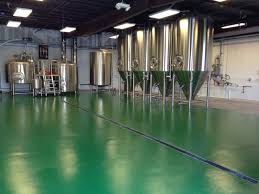
Ideal for hospitals, food facilities, warehouses, and any area requiring safe, compliant flooring.
High Build Thickness (10–30+ mils)
This allows excellent impact resistance and long-term durability.
Strongest Chemical and Abrasion Resistance
Perfect for UAE industries such as:
- Manufacturing
- Automotive
- Oil & gas service workshops
- Food and beverage
- Pharmaceutical & healthcare
Seamless, Hygienic, and Easy to Clean
Great for HACCP-compliant environments.
Most Suitable for UAE Climate
100% solids epoxies perform best under temperature extremes like UAE summers.
Limitations
Requires Skilled Installers
Improper mixing or installation can lead to curing issues, especially given UAE’s high temperatures.
Higher Cost
A premium product, but the long-term ROI is significantly better.
Limited Working Time
Heat accelerates curing—installers must work quickly.
Best Applications in the UAE
- Heavy-duty industrial facilities
- Logistics warehouses (Dubai South, JAFZA, KEZAD)
- Parking garages and basements
- Commercial kitchens
- Oil, fuel, and chemical handling zones
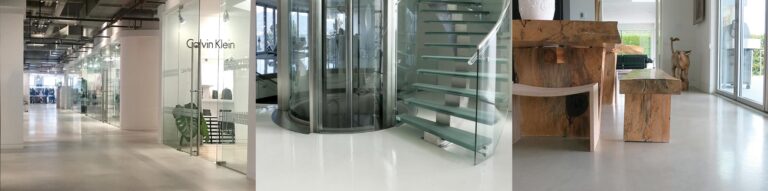
- Retail and luxury showrooms
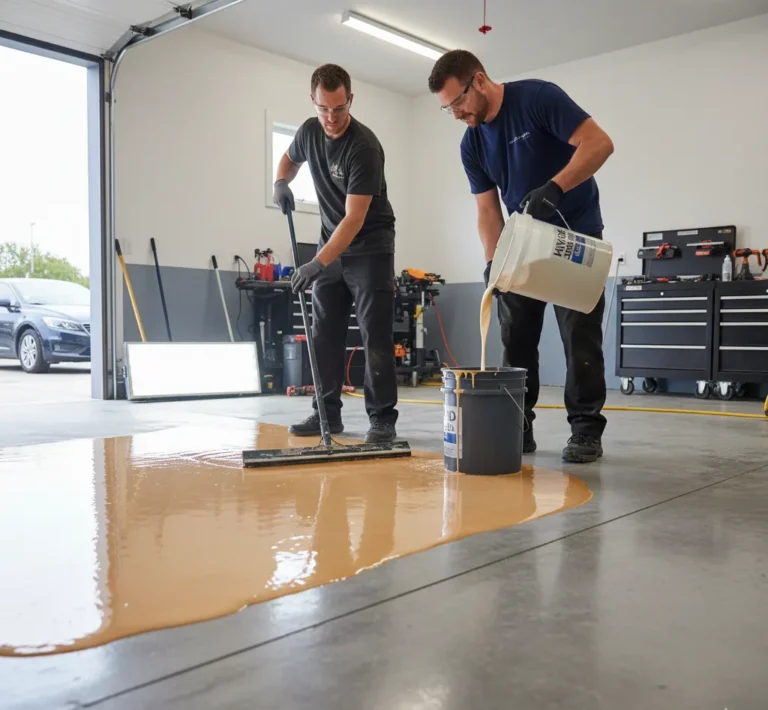
- High-end villa garages
A Performance Comparison Table for UAE Buyers
| Feature | Solvent-Based | Water-Based | 100% Solids |
| VOC Level | High | Low | Zero |
| Odor | Strong | Minimal | Minimal |
| Durability | Medium | Medium-Low | Very High |
| Film Thickness | 3–5 mils | 1–3 mils | 10–30+ mils |
| Chemical Resistance | Good | Moderate | Excellent |
| Installation Safety | Low | High | High |
| Cost | Low | Medium | High |
| Best Use Case | Industrial, old floors | Residential & commercial interiors | Heavy-duty industrial & commercial |
How UAE Climate Affects Epoxy Selection
1. Extreme Heat
Summer temperatures can cause:
- Faster curing
- Reduced working time
- Improper bonding if slab temperature exceeds 35°C
100% solids systems are engineered to handle heat better, especially when installed by trained applicators.
2. High Humidity
Moisture vapor emission is a major issue in many UAE concrete slabs.
Water-based epoxies often serve as excellent primers for moisture-prone areas.
100% solids vapour-blocking primers (like Duraamen’s systems) are the most reliable long-term solution.
3. UV Intensity
Outdoor areas in the UAE receive strong UV exposure.
- Solvent-based epoxies yellow quickly
- Water-based epoxies yellow slowly
- 100% solids epoxies require a UV-resistant polyurethane topcoat
Duraamen frequently uses polyaspartic or PU topcoats for UV protection.
Which Epoxy Should You Choose in the UAE?
Choose Solvent-Based Epoxy If:
- You need an economical option
- The space is industrial and not occupied
- Ventilation is not an issue
- You need quick application
Choose Water-Based Epoxy If:
- You’re coating a residential or commercial interior
- You need low odor and safe installation
- Budget is mid-range
- The area has mild to moderate foot traffic
Choose 100% Solids Epoxy If:
- Durability is your priority
- The floor will endure forklifts, vehicles, chemicals, or heat
- You need maximum hygiene (food, healthcare, pharma)
- You want long-term performance with minimal maintenance
- You want a premium finish (flake, metallic, quartz, etc.)
For most UAE industrial and commercial projects, 100% solids epoxy is the recommended standard.
The Duraamen Advantage in the UAE
Duraamen systems are engineered to perform exceptionally well in Middle Eastern environments. Benefits include:
Moisture-Tolerant Primers
Perfect for UAE concrete slabs with high moisture emission.
Seamless Hygienic Systems
Ideal for restaurants, hospitals, and food processing.
UV-Resistant Topcoats
Protect outdoor and exposed areas from yellowing.
Industrial-Grade Durability
Withstand heavy traffic, forklifts, heat, and chemicals.
Fast Installation & Minimal Downtime
Critical for commercial and industrial operations.
Available Across Dubai, Abu Dhabi, Sharjah, Ajman, and Ras Al Khaimah
Final Thoughts
Choosing the right type of epoxy flooring—solvent-based, water-based, or 100% solids—comes down to understanding your environment, usage, and long-term expectations. In the UAE’s demanding climate, 100% solids epoxies usually deliver the best performance, but water-based and solvent-based systems still play important roles depending on the project.
For premium, long-lasting, and locally-suitable flooring solutions, Duraamen remains one of the most trusted names in high-performance epoxy and resin flooring across the UAE.
FAQs
Which epoxy is best for UAE climate conditions?
100% solids epoxy is generally the best choice for UAE conditions. It handles extreme temperatures, heavy traffic, and moisture better than solvent-based or water-based systems. With zero VOCs and high build thickness, it performs well in warehouses, showrooms, and residential garages across Dubai, Abu Dhabi, Sharjah, and other emirates.
Are water-based epoxies durable enough for commercial use in the UAE?
Yes, but only for light-to-medium duty environments such as retail stores, clinics, offices, and commercial kitchens. For heavy-duty or high-traffic applications like logistics facilities, parking garages, or workshops, 100% solids epoxy is recommended.
Do solvent-based epoxies meet UAE environmental regulations?
Solvent-based epoxies contain high VOC levels, which makes them less compliant with UAE Green Building Regulations, especially in Dubai. While they are still used in some industrial and non-occupied spaces, most contractors and facility managers now prefer low-VOC water-based or 100% solids systems.
How long does epoxy flooring take to cure in Dubai’s high heat?
Curing time varies based on the epoxy type:
- Solvent-based: 6–10 hours
- Water-based: 12–24 hours
- 100% solids: 8–12 hours (depending on thickness)
In the summer, heat accelerates the curing process, so experienced installers are essential to avoid improper bonding.
Can epoxy flooring withstand UAE humidity and moisture?
Yes—with the right primer. Water-based epoxies and moisture-tolerant 100% solids primers are excellent for UAE slabs, which often have high moisture vapor emissions. Duraamen systems offer vapor-blocking primers that prevent bubbling, peeling, and delamination.
Is epoxy flooring safe for homes and villas in the UAE?
Absolutely. Water-based and 100% solids epoxy systems are low-odor, non-toxic, and contain little to no VOCs, making them safe for villa garages, kitchens, basements, and indoor spaces.
How long does epoxy flooring last in UAE conditions?
- Water-based epoxy: 3–5 years
- Solvent-based epoxy: 4–7 years
- 100% solids epoxy: 10–20+ years (with proper maintenance)
UAE climate conditions can be harsh, but high-quality products like Duraamen systems significantly extend floor lifespan.
Does epoxy flooring work for outdoor areas in the UAE?
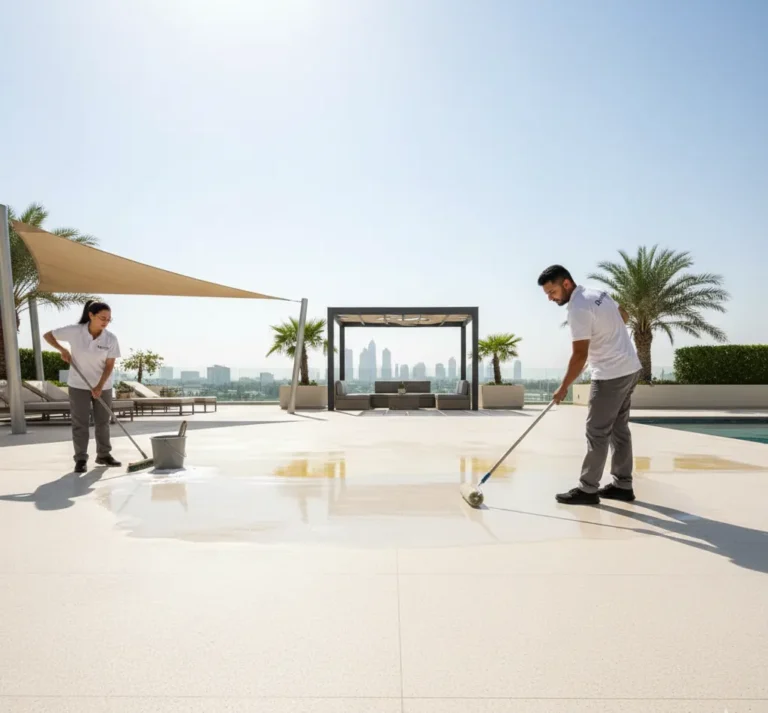
Epoxy can be used outdoors but requires UV-resistant topcoats, such as polyurethane or polyaspartic coatings, to prevent yellowing in intense UAE sunlight. For pergolas, driveways, balconies, and car parking areas, polyurethane-based systems are often preferred.
How much does epoxy flooring cost in the UAE?
Costs vary depending on the system:
- Water-based epoxy: AED 22–35 per m²
- Solvent-based epoxy: AED 25–40 per m²
- 100% solids epoxy: AED 45–85+ per m²
Prices depend on preparation, thickness, location, and design (flake, metallic, quartz, etc.).
Can epoxy be installed in occupied buildings in Dubai or Abu Dhabi?
Yes—water-based and 100% solids systems are safe for installation inside occupied buildings because they produce minimal odor and have low VOCs. Solvent-based products should not be used in occupied or poorly ventilated areas.
Which epoxy is best for warehouse flooring in UAE free zones (JAFZA, KEZAD, DIC)?
100% solids epoxy is the industry standard for UAE warehouses. It resists forklifts, pallet trolleys, petroleum products, and high traffic—common in logistics and industrial facilities across Dubai South, Jebel Ali Free Zone, and Abu Dhabi Industrial City.
Is epoxy flooring slippery?
Epoxy itself is smooth, but installers can add anti-slip aggregates (silica, quartz, aluminum oxide) to create a safe, slip-resistant flooring surface suitable for kitchens, warehouses, food facilities, and outdoor areas.
Can epoxy flooring crack in UAE temperatures?
Epoxy doesn’t crack on its own—the concrete slab underneath does. If a concrete slab expands or shrinks due to heat, structural issues, or moisture, the epoxy may reflect these cracks. Duraamen systems offer crack-bridging and flexible membranes to reduce this risk.
How do I maintain epoxy flooring in the UAE?
Maintenance is easy:
- Regular sweeping
- Wet mopping with mild detergents
- Avoid harsh chemicals
- Reapply topcoat every 4–6 years for heavy-use areas
Proper maintenance ensures long-term performance, especially in sandy environments like Dubai and Sharjah.
Who is the best epoxy flooring supplier in the UAE?
Duraamen is recognized as a leading supplier of high-performance epoxy and seamless resin flooring systems across Dubai, Abu Dhabi, Sharjah, and the wider Middle East. Our products are engineered to perform under UAE-specific heat, humidity, and industrial conditions.