Epoxy flooring is a popular choice for both residential and commercial spaces due to its durability and aesthetic appeal. However, the installation process is crucial to achieving a flawless finish. Mistakes during installation can lead to costly repairs and unsatisfactory results. In this article, we will explore common epoxy flooring installation mistakes and how to avoid them.
Common Epoxy Flooring Installation Mistakes That Professionals Avoid
Lack of Proper Training and Experience
One of the most significant mistakes in epoxy flooring installation is the lack of proper training and experience. Professionals understand the nuances of the process, from mixing to application. Without adequate training, DIY enthusiasts may overlook critical steps, leading to subpar results. Inadequate knowledge of epoxy properties can result in improper handling and application, while misunderstanding application techniques can lead to uneven surfaces. Overlooking safety precautions can also pose risks during installation.
- Inadequate knowledge of epoxy properties
- Misunderstanding of application techniques
- Overlooking safety precautions
Poor Surface Preparation Techniques
Surface preparation is the foundation of a successful epoxy flooring installation. Poor preparation can lead to adhesion issues and premature failure. Professionals meticulously clean and prepare the surface to ensure optimal bonding. Failure to remove contaminants like oil and grease can prevent the epoxy from adhering properly. Inadequate surface profiling can also hinder the bonding process, and skipping the moisture testing step can lead to future problems.
- Failure to remove contaminants like oil and grease
- Inadequate surface profiling
- Skipping the moisture testing step
Incorrect Primer Selection or Application
Choosing the right primer is essential for a strong bond between the substrate and the epoxy. Incorrect primer selection or application can compromise the entire flooring system. Professionals select primers based on the substrate type and environmental conditions. Using a primer incompatible with the substrate can weaken the bond, while applying primer unevenly can lead to patchy results. Not allowing sufficient drying time can also affect the primer’s effectiveness.
- Using a primer incompatible with the substrate
- Applying primer unevenly
- Not allowing sufficient drying time
Crucial Epoxy Flooring Installation Mistakes That Impact Durability
Wrong Resin-to-Hardener Ratio
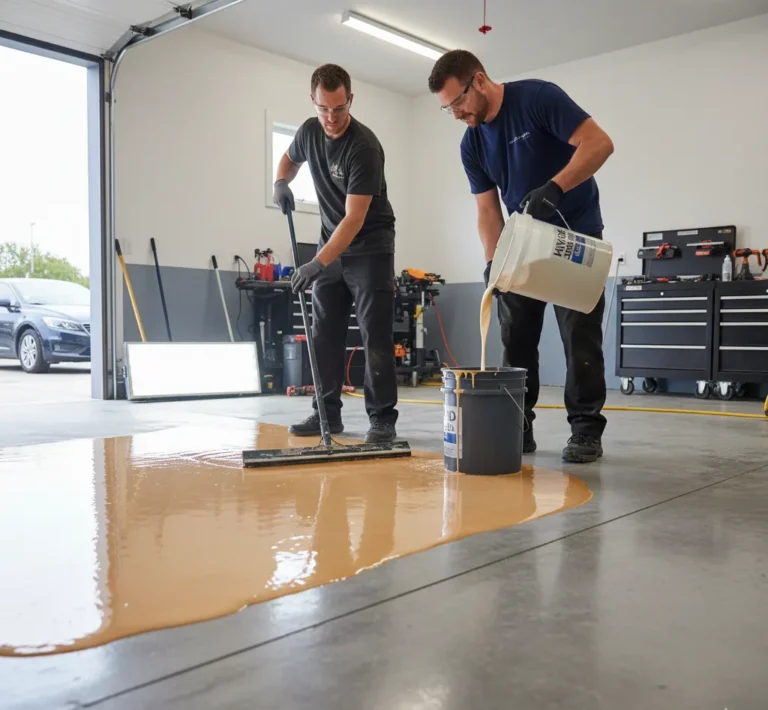
The resin-to-hardener ratio is critical in determining the strength and durability of the epoxy floor. An incorrect ratio can lead to weak flooring that is prone to damage. Professionals use precise measurements to ensure the correct ratio. Over or underestimating the hardener amount can affect the curing process, while not following manufacturer instructions can lead to inconsistencies. Inconsistent mixing can also result in uneven curing.
- Over or underestimating the hardener amount
- Not following manufacturer instructions
- Inconsistent mixing
Applying Epoxy on Weak or Incompatible Substrates
Epoxy should only be applied to substrates that can support its weight and bond effectively. Applying epoxy on weak or incompatible substrates can lead to cracking and delamination. Ignoring substrate condition assessments can result in applying epoxy on surfaces with existing damage. Using epoxy on unsuitable materials can also compromise the flooring’s integrity.
- Ignoring substrate condition assessments
- Applying on surfaces with existing damage
- Using epoxy on unsuitable materials
Failure to Control Moisture in Concrete and Air
Moisture is a significant enemy of epoxy flooring. Failure to control moisture levels in the concrete and air can lead to bubbling and peeling. Professionals use moisture barriers and dehumidifiers to manage moisture. Not conducting moisture tests can result in undetected issues, while ignoring environmental humidity levels can affect the curing process. Skipping moisture barrier application can also lead to long-term problems.
- Not conducting moisture tests
- Ignoring environmental humidity levels
- Skipping moisture barrier application
Epoxy Flooring Installation Mistakes That Lead to Visual Defects
Pin Holes and Bubbles from Outgassing
Outgassing occurs when trapped air escapes from the substrate, causing pinholes and bubbles in the epoxy. Proper surface preparation and application techniques can prevent these defects. Applying epoxy in thick layers can trap air, while not allowing the substrate to acclimate can lead to outgassing. Ignoring temperature fluctuations can also affect the curing process.
- Applying epoxy in thick layers
- Not allowing the substrate to acclimate
- Ignoring temperature fluctuations
Fish Eyes and Crawling Issues
Fish eyes and crawling occur when contaminants prevent the epoxy from adhering properly. These visual defects can be avoided with thorough cleaning and decontamination. The presence of oils or silicones on the surface can cause these issues, while inadequate cleaning before application can leave residues. Using contaminated tools can also introduce defects.
- Presence of oils or silicones on the surface
- Inadequate cleaning before application
- Using contaminated tools
Inconsistent Color and Uniformity
Achieving a consistent color and uniform finish requires careful attention to detail. Inconsistent mixing or application can result in a patchy appearance. Uneven mixing of pigments can lead to color variations, while applying epoxy in varying thicknesses can create an uneven surface. Not maintaining a wet edge during application can also result in visible lines.
- Uneven mixing of pigments
- Applying epoxy in varying thicknesses
- Not maintaining a wet edge during application
How to Avoid Epoxy Flooring Installation Mistakes That Cause Peeling
Proper Surface Cleaning and Decontamination
Thorough cleaning and decontamination are essential to prevent peeling. Any residue left on the surface can interfere with adhesion. Removing all dust and debris ensures a clean surface, while using appropriate cleaning agents can eliminate contaminants. Ensuring the surface is dry before application is also crucial for proper adhesion.
- Removing all dust and debris
- Using appropriate cleaning agents
- Ensuring the surface is dry before application
Addressing Substrate Cracks and Imperfections
Cracks and imperfections in the substrate can lead to peeling if not addressed before epoxy application. Professionals repair these issues to ensure a smooth surface. Filling cracks with suitable fillers can prevent future problems, while grinding down high spots ensures an even surface. Leveling uneven areas is also important for a uniform finish.
- Filling cracks with suitable fillers
- Grinding down high spots
- Leveling uneven areas
Ensuring Adequate Curing Time and Conditions
Curing time and conditions are crucial for the epoxy to achieve its full strength. Rushing the process can lead to peeling and other issues. Allowing sufficient curing time as per manufacturer guidelines ensures proper bonding, while maintaining optimal temperature and humidity supports the curing process. Avoiding foot traffic during curing is also important to prevent damage.
- Allowing sufficient curing time as per manufacturer guidelines
- Maintaining optimal temperature and humidity
- Avoiding foot traffic during curing
Preventing Epoxy Flooring Installation Mistakes That Result in Discoloration
Selecting UV-Resistant Epoxy Systems
Exposure to UV light can cause epoxy floors to discolor over time. Selecting UV-resistant epoxy systems can prevent this issue. Choosing epoxy with UV stabilizers can protect against discoloration, while considering topcoats with UV protection adds an extra layer of defense. Avoiding direct sunlight exposure during curing is also important.
- Choosing epoxy with UV stabilizers
- Considering topcoats with UV protection
- Avoiding direct sunlight exposure during curing
Proper Mixing and Application Techniques
Proper mixing and application techniques are essential to prevent discoloration. Inconsistent mixing can lead to uneven color distribution. Mixing components thoroughly ensures uniformity, while using mechanical mixers for consistency can prevent variations. Applying in thin, even coats supports a smooth finish.
- Mixing components thoroughly
- Using mechanical mixers for consistency
- Applying in thin, even coats
Avoiding Chemical Exposure During Curing
Chemical exposure during curing can lead to discoloration and other defects. Professionals ensure the environment is free from harmful chemicals. Keeping the area well-ventilated prevents chemical buildup, while avoiding the use of cleaning agents nearby reduces the risk of contamination. Ensuring no chemical spills occur is also crucial.
- Keeping the area well-ventilated
- Avoiding the use of cleaning agents nearby
- Ensuring no chemical spills occur
Expert Tips to Prevent Epoxy Flooring Installation Mistakes That Compromise Quality
Professionals recommend thorough training and adherence to manufacturer guidelines to prevent mistakes. Investing in quality materials and tools can also enhance the installation process. Regular inspections during installation can catch potential issues early.
- Attend workshops and training sessions
- Use high-quality epoxy systems
- Conduct regular inspections during installation
Understanding the Impact of Environmental Factors on Epoxy Flooring Installation
Environmental factors such as temperature and humidity play a significant role in epoxy flooring installation. Professionals monitor these factors to ensure optimal curing and adhesion. Ignoring environmental conditions can lead to defects and premature failure.
- Monitor temperature and humidity levels
- Use dehumidifiers if necessary
- Avoid installation during extreme weather conditions
Tools and Techniques to Minimize Epoxy Flooring Installation Mistakes That Affect Performance
Using the right tools and techniques can minimize mistakes and enhance performance. Professionals rely on specialized equipment for mixing, application, and surface preparation.
- Use mechanical mixers for consistent mixing
- Employ squeegees and rollers for even application
- Invest in moisture meters for accurate testing
The Role of Proper Planning in Avoiding Epoxy Flooring Installation Mistakes That Delay Projects
Proper planning is essential to avoid delays and mistakes in epoxy flooring installation. Professionals create detailed plans that outline each step of the process, from surface preparation to curing.
- Develop a comprehensive project timeline
- Allocate sufficient time for each step
- Anticipate potential challenges and solutions
Long-Term Effects of Epoxy Flooring Installation Mistakes That Go Unaddressed
Unaddressed installation mistakes can have long-term effects on the durability and appearance of epoxy flooring. Over time, these issues can lead to costly repairs and reduced lifespan.
- Increased maintenance costs
- Frequent repairs and touch-ups
- Shortened lifespan of the flooring system
By understanding and avoiding these common epoxy flooring installation mistakes, you can ensure a successful project that stands the test of time. For more insights, consider consulting experts like Duraamen, who specialize in high-quality epoxy flooring solutions.
FAQs
What are the most common epoxy flooring installation mistakes that DIYers make?
The most common epoxy flooring installation mistakes that DIYers make include improper surface preparation, incorrect mixing ratios, and applying epoxy in unfavorable environmental conditions. These mistakes can lead to poor adhesion, weak flooring, and visual defects. Proper training and adherence to manufacturer guidelines can help avoid these issues.
How can I avoid epoxy flooring installation mistakes that lead to bubbles and pinholes?
To avoid epoxy flooring installation mistakes that cause bubbles and pinholes, ensure proper surface preparation, use a suitable primer, and apply the epoxy in thin, even coats. Controlling environmental conditions and allowing the substrate to acclimate can also prevent outgassing. Following these steps will result in a smooth, defect-free finish.
What are the consequences of epoxy flooring installation mistakes that result in peeling?
Epoxy flooring installation mistakes that result in peeling can lead to costly repairs, reduced durability, and compromised aesthetics of the floor. Peeling can expose the substrate to damage and require complete reinstallation. Addressing surface preparation and curing conditions can prevent peeling and extend the floor’s lifespan.