A Complete Technical Guide for Consultants, Fit-Out Contractors, Developers & Interior Designers Across the UAE
Microcement has gained massive popularity in the UAE for its minimalistic design, seamless finish, and premium aesthetic—especially in luxury villas, hotel renovations, retail stores, and commercial fit-outs. At the same time, Gyp-Crete® and other gypsum-based underlayments are increasingly being used for leveling uneven slabs and improving sound insulation in multi-storey buildings.
However, installing microcement over Gyp-Crete in the UAE requires strict adherence to:
- UAE building code requirements
- Sound insulation standards
- Moisture management guidelines
- Correct substrate preparation techniques
- Fire-safety and load-bearing considerations
When the wrong system is used—or when moisture barriers and primers are ignored—microcement can fail quickly through:
- Cracking
- Delamination
- Blistering
- Sound transmission failures
- Moisture damage within the gypsum layer
This detailed guide explains exactly how to install microcement correctly and safely over gypsum-based underlayments in UAE buildings, ensuring long-term durability and full code compliance.
In UAE megaprojects such as Downtown Dubai, Business Bay, and Al Reem Island, gypsum underlayments help reduce floor-to-floor loads and allow architects to achieve slimmer slab designs. Their fast installation times are also an advantage for contractors working on tight deadlines. In hospitality projects, Gyp-Crete is widely used because it helps achieve premium sound ratings—an essential requirement in hotel bedrooms and serviced apartments.
These weaknesses become more pronounced in UAE conditions where humidity levels are high, and air-conditioning units frequently produce condensation. Gypsum is also extremely sensitive to surface abrasion; even mild grinding can expose weak areas if not performed carefully. This is why surface reinforcement through an epoxy primer and sand broadcast is essential before microcement application.
Key UAE-Specific Challenges When Installing Microcement Over Gypsum Subfloors
1. High Humidity & Moisture Vapor in GCC Climate
UAE’s climate includes:
- High moisture in marine developments (Palm Jumeirah, Yas Island).
- Vapor drive in basements and ground floors.
- High HVAC humidity in indoor spaces.
Gyp-Crete absorbs moisture, which can lead to softening and structural breakdown.Moisture trapped beneath microcement can create hydrostatic pressure, causing bubbling and delamination. Gulf humidity also fluctuates significantly between seasons, making continuous moisture control essential. For this reason, professional installers use moisture-tolerant epoxy primers specifically engineered for gypsum substrates in the UAE.
2. UAE Civil Defense & Fire Code Requirements
Gypsum underlayments contribute to fire-rated assembly systems. Any added flooring system must comply with:
- UAE Fire & Life Safety Code (2021)
- Civil Defense approvals (Dubai / Abu Dhabi)
Microcement does not disrupt fire ratings if installed correctly.
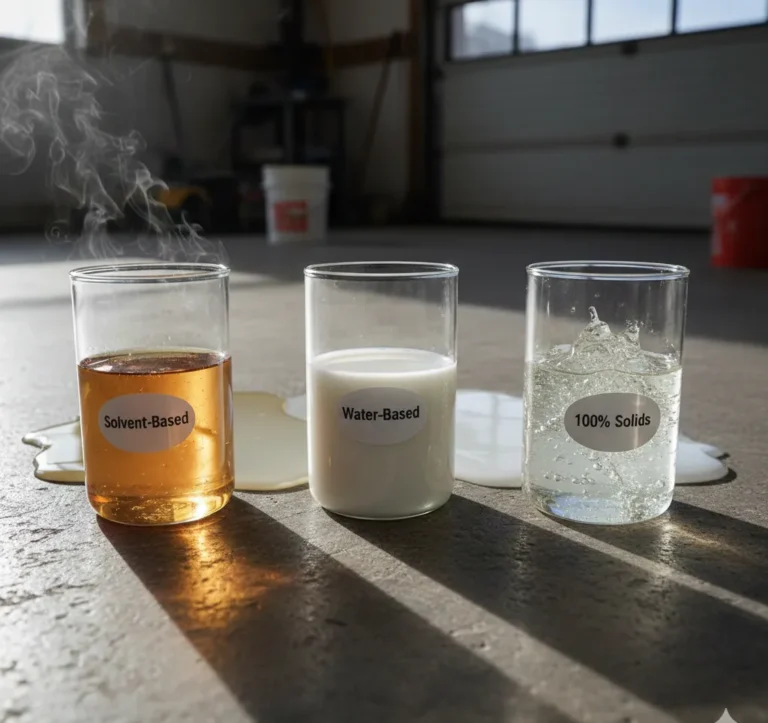
Because microcement is non-combustible and extremely thin, it does not interfere with existing fire-rated floor assemblies when properly applied. However, installers must avoid using solvent-based primers that may conflict with fire-safety guidelines. Approved low-VOC, non-flammable resin systems are recommended to maintain compliance.
3. Sound Rating Requirements Under UAE Building Regulations
Developers in the UAE typically target:
- STC 50–60 (airborne sound)
- IIC 50–60 (impact sound)
Microcement must be applied in a way that does not compress or damage the acoustic membrane beneath the gypsum layer.
Many high-end towers rely on acoustic mats beneath Gyp-Crete to achieve these ratings. Any penetration or damage to these mats can cause the unit to fail handover inspections. Microcement, being lightweight and thin, is acoustically neutral—but only when no mechanical fasteners or heavy levelling compounds are introduced into the assembly.
4. Weight Restrictions in High-Rise Towers
Gypsum floors are used because they are extremely lightweight. Microcement adds only 3–6 kg/m², making it safe—if installed correctly.
Compared to tiles or concrete toppings, microcement significantly reduces load on structural slabs. This makes it ideal for penthouses, refurbishments, and retrofit projects where weight limitations are strict. Engineers often approve microcement systems because the added load is negligible and falls well within safe limits.
5. Luxury Design Expectations
Premium clients in Dubai, Abu Dhabi, Al Ain & Ras Al Khaimah expect:
- Seamless finishes
- Matte or polished looks
- Color consistency
- Crack-free surfaces
Microcement over Gyp-Crete requires precision to meet these expectations.High-end interior designers also require customizable pigments, texture consistency, and extremely tight tolerances. Microcement must be applied by trained applicators who understand gypsum behaviour, otherwise uneven textures or minor substrate imperfections can become visible. A robust epoxy-sand foundation is essential for achieving world-class finishes.
Correct UAE-Standard Method for Installing Microcement Over Gyp-Crete
Below is the exact professional process used by top UAE contractors and recommended by microcement manufacturers.
STEP 1 — Substrate Testing
Hardness Testing
Ensures gypsum has cured sufficiently.
Moisture Testing
Using:
- ASTM F2170 (RH)
- MVER test (moisture emission rate)
Moisture must meet microcement specifications (typically below 5%).
Sound Mat Inspection
Check that acoustic membranes are intact and continuous. Testing should also include checking for weak spots, hollow-sounding areas, and surface deflection. Any inconsistencies must be patched with gypsum-compatible repair materials. In UAE projects, testing is especially important because HVAC systems can slow gypsum drying times.
STEP 2 — Mechanical Surface Preparation
Gyp-Crete must never be left untreated.
Light diamond grinding (not heavy grinding)
To remove laitance and chalky surface.
HEPA vacuum removal
UAE labor safety laws (OSHAD & DM requirements) demand dust-controlled grinding.
Over-grinding can expose the soft gypsum core, weakening the substrate. Gentle grinding removes laitance and chalkiness while maintaining structural integrity. HEPA vacuums are mandatory to control airborne dust in interior projects.
STEP 3 — Apply a Moisture-Tolerant Epoxy Primer (Mandatory)
This is the most critical step.
A moisture barrier is required because:
- Gypsum is extremely porous
- UAE humidity is high
- Microcement contains water-based materials during application
A 100% solids moisture-tolerant epoxy primer from Duraamen is the recommended solution.This primer seals the gypsum, blocks moisture migration, and creates a chemically reactive surface for the microcement to bond. Without this layer, microcement adhesion is highly unstable.
STEP 4 — Full Silica Sand Broadcast (“to rejection”)
While the primer is still wet:
- Silica sand is broadcast
- The surface becomes rough and textured
- Mechanical grip is created
This prevents microcement from shearing or lifting.Without sand broadcast, microcement will fail over gypsum.
This step converts a smooth epoxy surface into a high-bond mechanical anchor. When the epoxy cures, the sand becomes permanently locked, creating a superior bonding matrix for microcement layers.
STEP 5 — Microcement Base Layers (2–3 coats)
Each coat:
- 1–2 mm
- Hand-troweled
- Applied evenly
- Fully bonded to sand-broadcasted epoxy
These layers build the system thickness and structural stability. These layers also help correct minor surface variations and reinforce the surface. Skilled trowelling ensures consistency of texture and prevents weak spots.
STEP 6 — Microcement Finish Coats (1–2 coats)
Finish options include:
- Matte
- Satin
- Polished
- Stone-look
- Industrial grey
These give the final design appearance.
Designers often request custom textures such as “cloudy,” “soft brushed,” or “Venetian-style” finishes. These must be executed during the final microcement stages to achieve perfect uniformity.
STEP 7 — Polyurethane or Polyaspartic Sealer (UAE-Approved)
Sealers must be:
- UV-resistant
- Abrasion-resistant
- Chemical-resistant
- Low-VOC (DM approved)
Polyurethane or polyaspartic sealers provide long-term protection.
These sealers protect the finish against cleaning chemicals, sunlight exposure, and heavy foot traffic. Polyaspartics cure extremely fast—ideal for time-sensitive UAE projects.
Ensuring UAE Code-Compliant Sound Ratings (STC / IIC)
Microcement cannot disrupt the acoustical assembly beneath the Gyp-Crete.
TO MAINTAIN SOUND RATINGS:
✔ Do NOT fasten anything through the gypsum layer
(no screws, nails, fixings)
✔ Do NOT use leveling compounds that add heavy load
✔ Keep the acoustic mat beneath Gyp-Crete intact
✔ Install microcement at thin layers (3–4 mm total)
✔ Maintain gypsum layer thickness recommended by manufacturer
Correct installation ensures the flooring assembly remains compliant with:
- Dubai Green Building Regulations
- Abu Dhabi QCC acoustic guidelines
- UAE Fire & Life Safety Code
- International Building Code (adopted in parts)
UAE authorities require acoustic compliance during handover—especially in luxury developments. Microcement allows compliance because it adds minimal mass and does not interfere with acoustic materials.
Moisture Barriers: Critical for UAE Gypsum Subfloors
High humidity + gypsum + microcement = high failure risk if unprotected.
Common UAE moisture sources:
- HVAC condensation
- Plumbing leaks
- High RH coastal air
- Ground moisture in basements
- Saline vapor movement in coastal developments
- Concrete slab moisture vapor emission
Because the UAE has extreme humidity levels, gypsum without a vapor barrier deteriorates quickly. Salt-rich coastal environments (Dubai Marina, Saadiyat, Palm) also increase moisture infiltration. Epoxy moisture vapor barriers are essential to protect the gypsum layer.
REQUIRED SOLUTION:
A 100% solids epoxy moisture vapor barrier (MVB) must be applied.
Duraamen’s moisture-tolerant epoxies are engineered for these conditions.
When Microcement Should Not Be Installed Over Gyp-Crete in the UAE
In these cases, substrate repair or replacement is necessary. Attempting installation over unstable gypsum will result in failures within months.
Avoid installation if:
- Moisture levels exceed manufacturer limits
- Gypsum substrate is crumbling or soft
- Epoxy primer is skipped
- Sound mat is damaged
- Heavy grinding exposes gypsum aggregate
- Areas are exposed to future flooding
- Substrate temperature exceeds tolerance (common in UAE summer)
Benefits of Microcement Over Gyp-Crete for UAE Projects
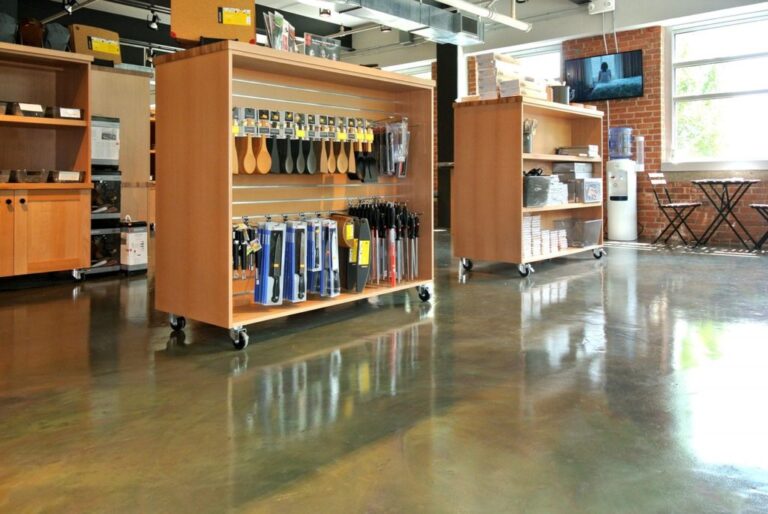
The combination of aesthetic freedom, durability, and low maintenance makes microcement ideal for modern UAE interiors. Its ability to imitate stone, concrete, and polished plaster adds flexibility to designers.
- Ultra-lightweight
- Seamless
- Compatible with underfloor cooling
- Fast application
- Strong adhesion (with epoxy primer)
- Long-lasting
- Hygienic
- Meets UAE code
- Suitable for residential & commercial
Use Cases in the UAE
1. Luxury Villas (Dubai Hills, Palm Jumeirah, Arabian Ranches)
Seamless minimalist interiors.
2. Hospitality & Hotels (JBR, Downtown Dubai, Saadiyat Island)
Microcement in bathrooms, lobbies, suites, and spas.
3. High-Rise Apartments (Marina, Business Bay)
Lightweight flooring ideal for renovations.
4. Retail Stores (Dubai Mall, MOE, Yas Mall)
Premium aesthetics with durable commercial performance.
5. Restaurants, Cafés & Lounges
Hygienic, easy to clean, moisture-resistant.
6. Offices & Commercial Spaces
Durable, stylish, and compliant with UAE safety regulations.
Microcement vs Other Flooring Over Gyp-Crete (UAE Comparison)
Microcement outperforms most flooring types when weight, flexibility, and compatibility with gypsum are considered. Tiles add heavy loads and require thick adhesives, while wood flooring is highly sensitive to gypsum moisture. Epoxy coatings can work well but lack the natural aesthetic flexibility of microcement.
| Flooring Type | Performance Over Gyp-Crete | Moisture Risk | Aesthetic Quality | Installation Time | UAE Code Compliance |
| Microcement (with epoxy primer) | Excellent | Low | Very High | Medium | High |
| Tile | Good | Medium | High | Long | Medium |
| Vinyl / LVT | Good | Medium–High | Medium | Fast | High |
| Self-leveling epoxy | High | Low | High | Medium | High |
| Wood / Laminate | Poor | High | Medium | Medium | Low |
Microcement provides the best balance of design, performance, and code compliance.
FAQs
1. Can microcement be installed directly over Gyp-Crete in the UAE?
No. It requires epoxy primer + full sand broadcast for proper adhesion and moisture protection.
2. Will microcement crack over gypsum subfloors?
Only if installed incorrectly. With epoxy primer and correct preparation, microcement remains highly crack-resistant.
3. Does microcement affect UAE sound ratings (STC/IIC)?
No—when installed correctly over a continuous gypsum + acoustic mat assembly.
4. What moisture barrier is required?
A 100% solids epoxy MVB compatible with gypsum substrates.
5. Is microcement suitable for bathrooms and wet areas?
Yes, with the correct sealers and waterproofing membrane beneath the gypsum.
6. Does microcement discolor in UAE sunlight?
Polyurethane/polyaspartic sealers prevent UV yellowing.
7. How long does the installation take?
3–5 days depending on curing times, humidity, and substrate preparation.
8. Is microcement too heavy for high-rise buildings?
No. It is extremely lightweight—much lighter than tiles or concrete toppings.
9. Can microcement be applied over radiant or underfloor cooling systems?
Yes. It works well with hydronic and electric systems embedded in Gyp-Crete.
10. What is the biggest cause of microcement failure in the UAE?
Skipping the epoxy moisture barrier + sand broadcast.